Wind, sand, and a dream of flight brought Wilbur and Orville Wright to Kitty Hawk, North Carolina where, after four years of scientific experimentation, they achieved the first successful airplane flights on December 17, 1903. From 1900 to 1903, Wilbur and Orville Wright came to North Carolina from Dayton, Ohio, based on information from the U.S. Weather Bureau about the area’s steady winds. They also valued the privacy provided by this location, which in the early twentieth century was remote from major population centers.
The Hill at the Wright Brothers National Memorial
The hill at the Wright Brothers National Memorial in Kill Devil Hills, near Kitty Hawk, North Carolina, played a crucial role in early aviation history.
Purpose of the Hill
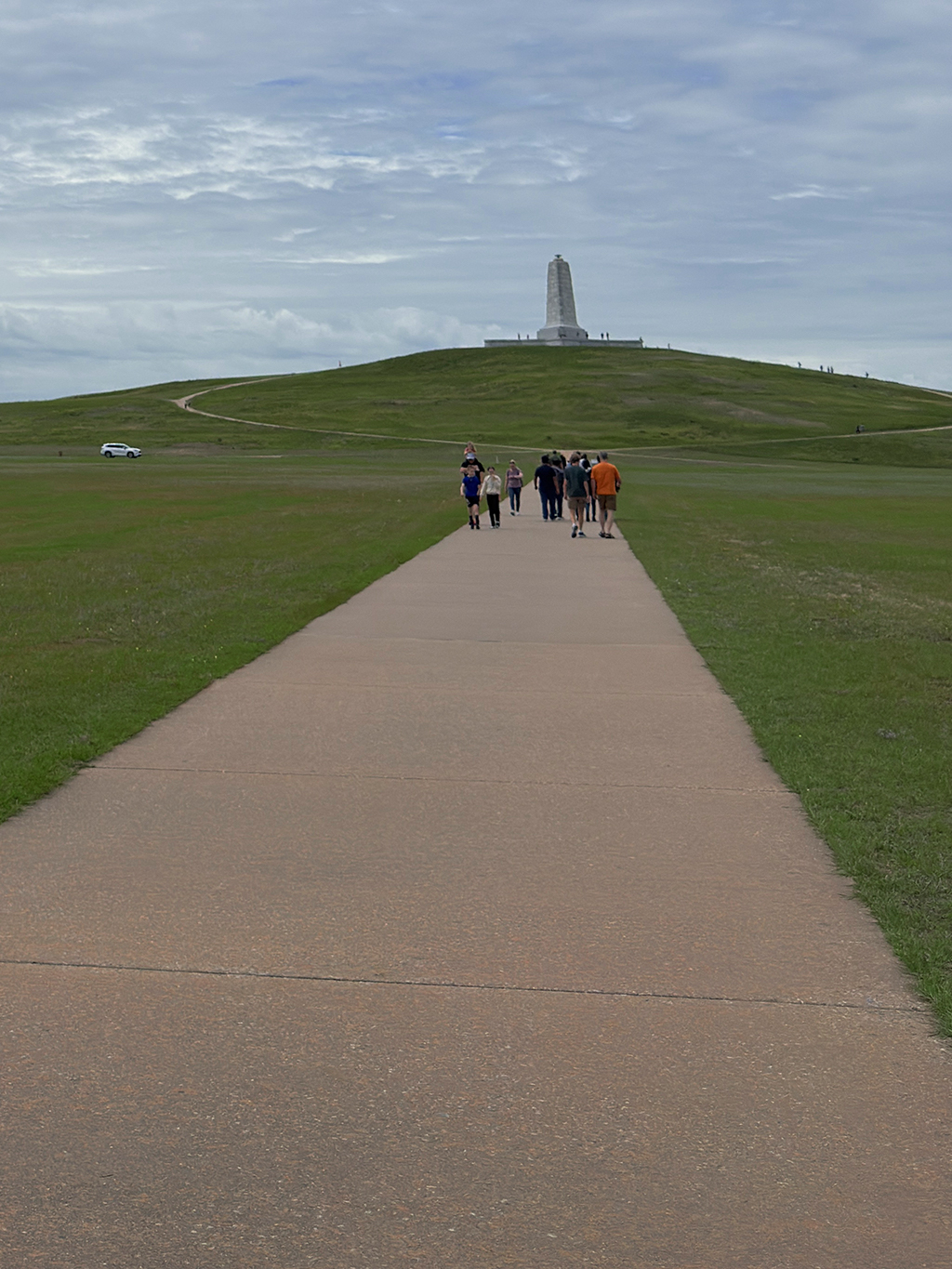
The hill — originally a large sand dune known as Big Kill Devil Hill — was where Wilbur and Orville Wright conducted glider tests before their first powered flight in 1903.
Why They Used the Hill
- Elevation: It gave them a launch point to glide farther and practice controlling the aircraft.
- Consistent Winds: The Outer Banks area, including the hill, had steady winds ideal for flight experiments.
- Soft Sand Landings: Crashes were less dangerous due to the sand.
After their glider tests (1899–1902), the Wrights made their first powered flight on the nearby flat ground on December 17, 1903 — not from the hill but close to it.
The Monument
The large granite monument atop Big Kill Devil Hill was dedicated in 1932 to honor their achievement. It commemorates the brothers and marks the area where they developed and tested their early flying machines.
So, the hill wasn’t where the first flight took off — it was where they refined their control and design through glider testing, which made that first flight possible.
The Wright Monument
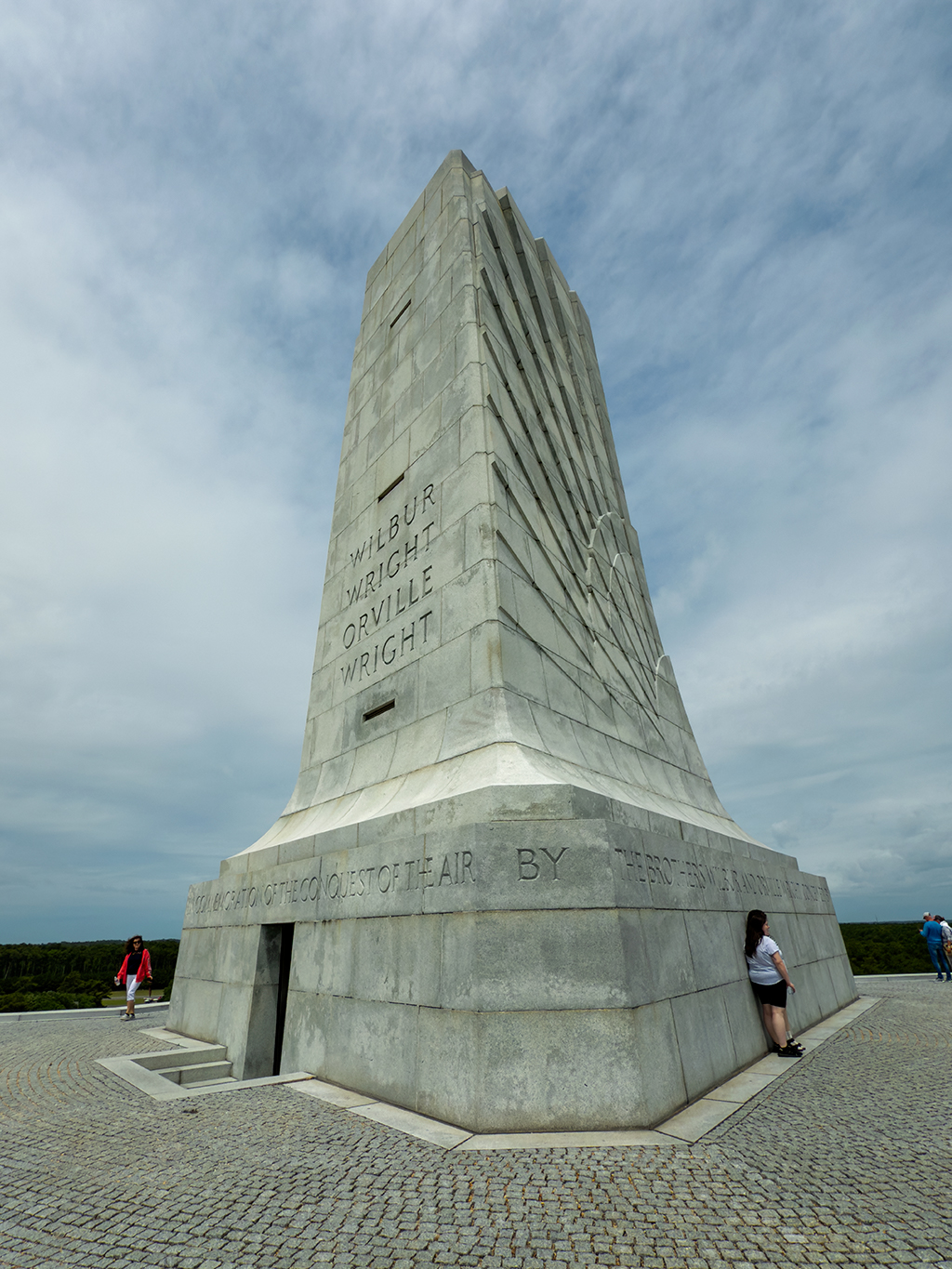
A towering 60-foot granite monument, dedicated in 1932, honors the Wright brothers’ revolutionary achievement.
Inscribed on the monument:
“In commemoration of the conquest of the air by the brothers Wilbur and Orville Wright. Conceived by genius, achieved by dauntless resolution and unconquerable faith.”
Historic Markers and Paths
Marked pathways and plaques guide visitors through the Wrights’ early testing grounds, with visible indicators of their glider launches and powered flight distances.
Iconic Photo Spot
Whether you visit at sunrise or sunset, the hilltop offers a striking backdrop for memorable photos — with the monument standing proudly against the Carolina sky.
What to See at the Top of the Monument Hill
Climbing to the top of Big Kill Devil Hill at the Wright Brothers National Memorial offers more than just history — it delivers incredible views and powerful symbolism.
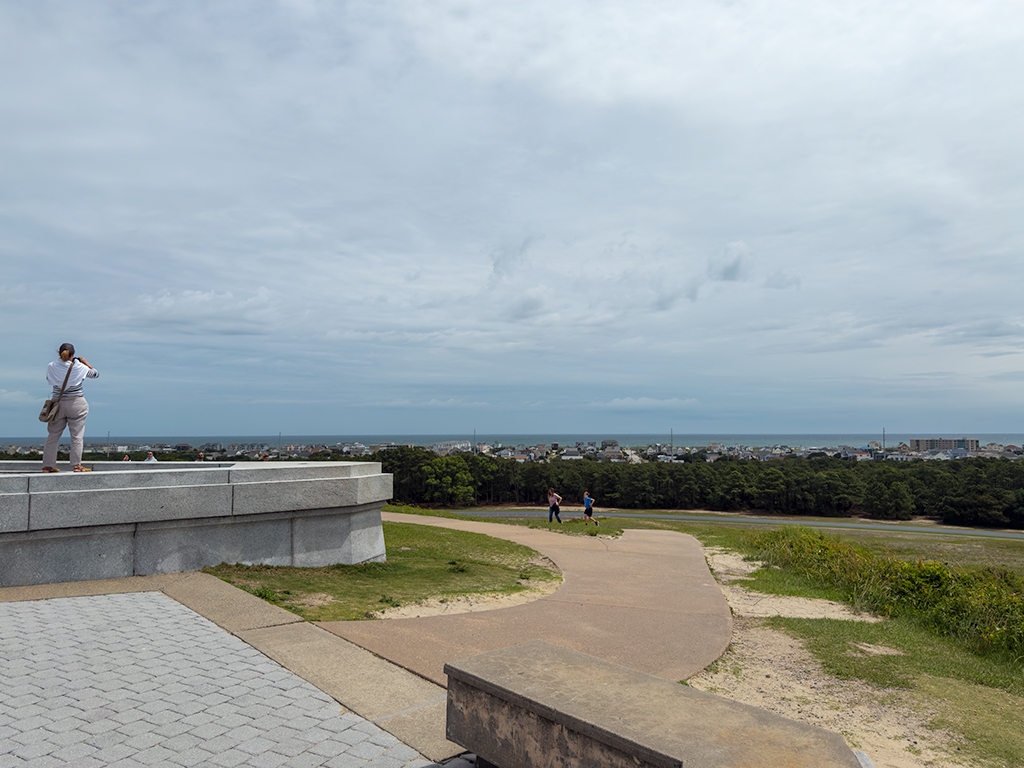
Panoramic Views
Enjoy sweeping views of the Outer Banks, including the Atlantic Ocean, surrounding dunes, and distant towns. From the summit, you can also see the historic flight path markers below.
The First Flight Take-Off Spot
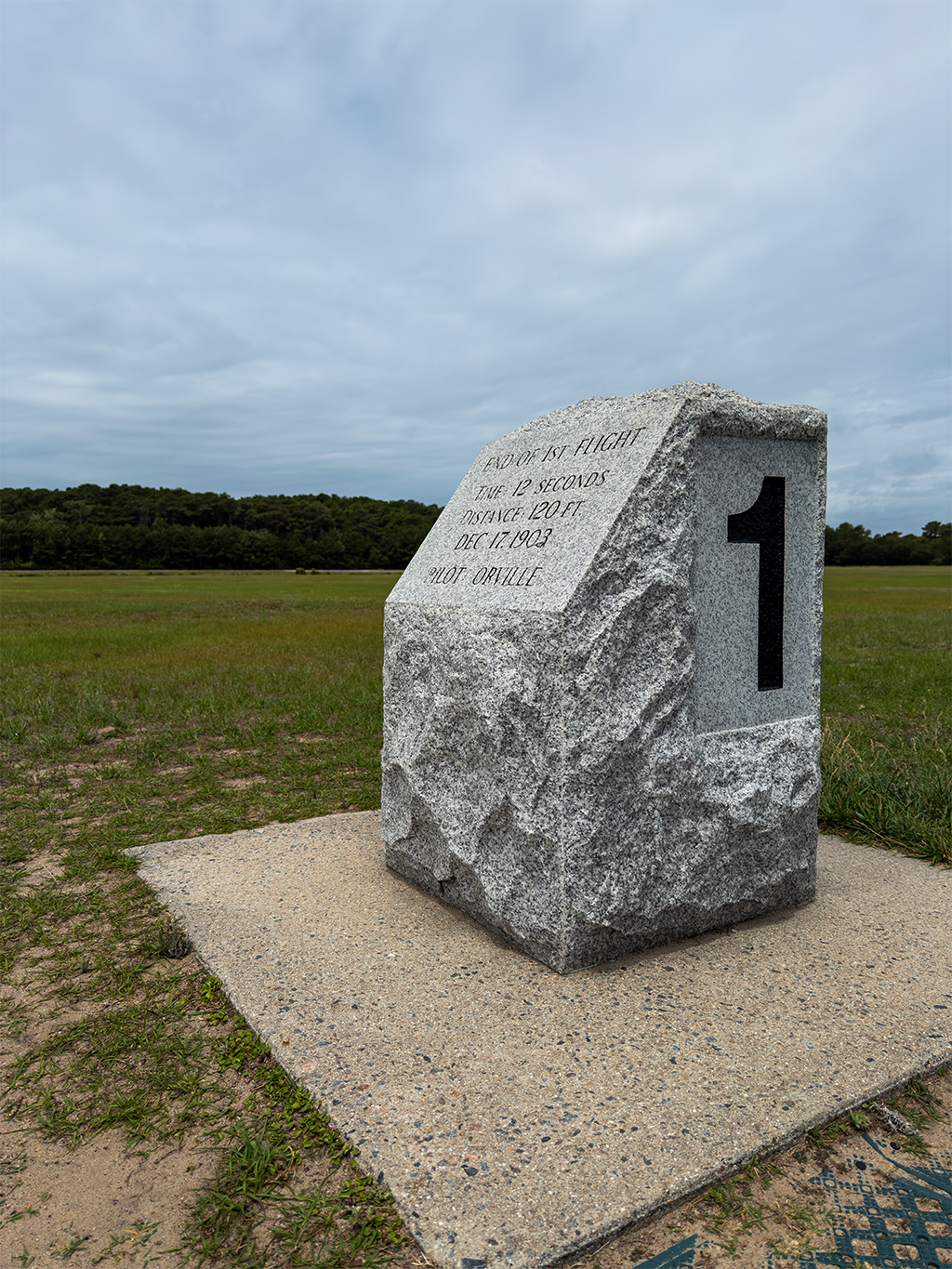
The first marker on the flight line is a simple yet powerful granite stone embedded in the grass near the original takeoff point. It marks the exact spot where Orville Wright lifted off at 10:35 a.m. on December 17, 1903, flying 120 feet in just 12 seconds.
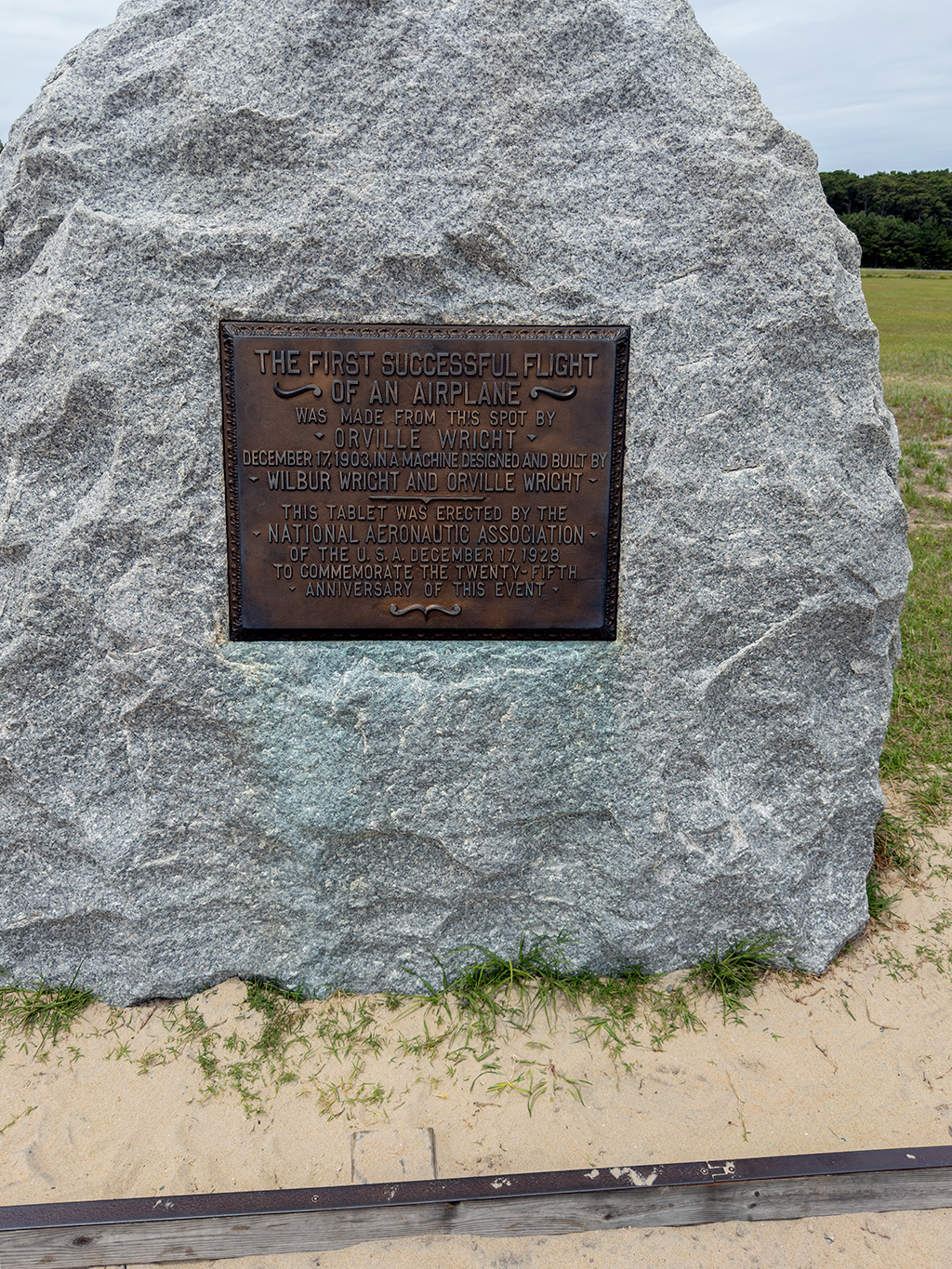
The First Flight Landing Marker
First Flight Marker – 12 Seconds, 120 Feet
The first marker along the flight line at the Wright Brothers National Memorial marks the spot where Orville Wright’s historic first powered flight came to a stop on the morning of December 17, 1903.
Located 120 feet from the takeoff rail, the granite stone commemorates the end of the very first flight in history — a 12-second journey that lifted the world into the age of aviation.